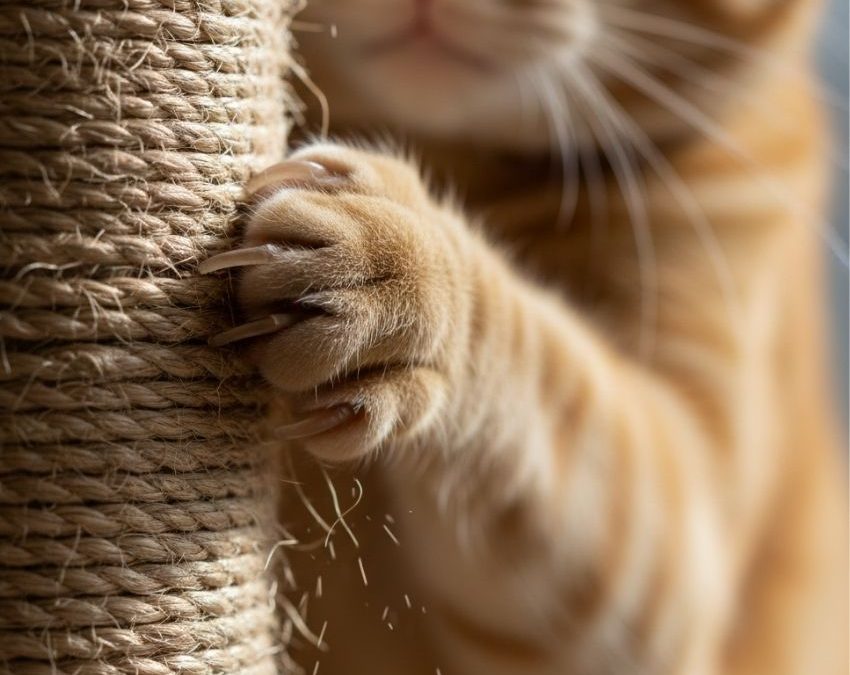
The holiday season is a beautiful time for new additions to the family, including kittens and cats. If you are a current or potential cat owner, the topic of scratching—and sometimes, the drastic measure of declawing—may have crossed your mind. Fortunately, there are many effective and humane declawing alternatives available.
But here’s the most important takeaway: Declawing is not a simple manicure; it is a serious, painful, and life-altering surgery that is now widely considered inhumane.
We’re diving deep to explain what declawing really is, why your cat must scratch, and the five effective, pain-free alternatives that will protect your sofa and keep your feline friend happy and healthy.
The Hard Truth: What Declawing Really Means
When you hear the term “declawing,” it often sounds like a simple procedure to remove the nail. The reality is far more severe.
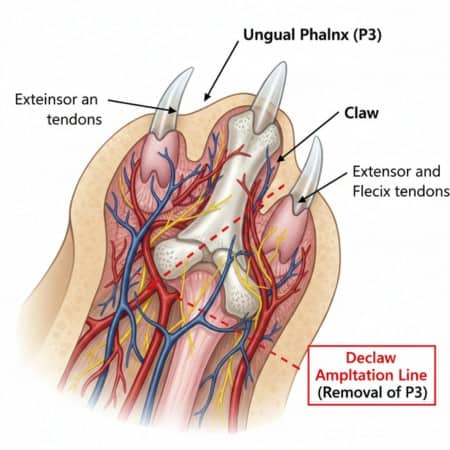
Declawing (Onychectomy) is the surgical amputation of the last bone of a cat’s toes. Cats’ claws grow directly from this bone, meaning the only way to remove the claw permanently is to remove the bone it’s attached to.
To help visualize this, think of the human hand:
If the declawing procedure were performed on a human, it would be the equivalent of amputating the tip of each of your fingers at the last knuckle (the first joint). This is not just removing the fingernail; it is the permanent removal of the fingertip, including bone, nerves, and ligaments.
This surgery results in immediate pain and, as we will discuss, significant long-term complications, which is why the procedure is now banned in many places.
🧠 The Psychological Toll: Why Declawing is Traumatic
Beyond the obvious physical pain, declawing inflicts a significant psychological toll that can affect a cat’s behavior and personality for life. A cat’s claws are not just tools; they are essential to their security, confidence, and emotional regulation.
1. The Breakdown of Defense and Security
A cat’s claws are their primary line of defense and a necessary tool for traction, climbing, and escape. Removing them leaves the cat feeling perpetually vulnerable and defenseless. This can lead to a state of chronic stress and anxiety because they have lost the ability to protect themselves or quickly escape perceived danger. This is a trauma similar to a loss of a core protective function.
2. Scratching Releases Happy Hormones
The act of scratching is deeply satisfying and is crucial for a cat’s overall well-being. Engaging in this natural, instinctual behavior provides positive emotional and physical feedback.
- Stress Relief and Stretching: Scratching allows the cat to relieve physical tension and stress with a full-body stretch.
- Feline Communication: It allows the cat to mark its territory with both a visual mark and the scent (pheromones) from glands in its paws. Successfully marking territory is a powerful confidence booster, and the physical act can be linked to the release of beneficial neurotransmitters like serotonin.
Denying a cat the ability to engage in this behavior by declawing them contributes to frustration, anxiety, and a diminished quality of life.
🚫 Why Cats Scratch: Myths vs. Truth
The number one reason pet owners consider declawing is destructive scratching on furniture. They often view it as a spiteful or purely destructive behavior. This couldn’t be further from the truth.
| Myth | Truth |
| “Cats scratch to be bad/destructive.” | Cats scratch because it is a natural, necessary instinct integral to their physical and emotional well-being. |
| “Scratching is only about filing nails.” | Scratching is a full-body stretch and a crucial form of scent and visual marking for territory. |
The Essential Reasons Cats Must Scratch:
Stretching & Exercise: When a cat scratches, they are stretching all the muscles and tendons in their back, legs, and toes.
Shedding Nail Layers: Scratching removes the dead, outer layers of the claw, keeping the nails clean and sharp.
Communication & Marking: Cats leave behind both a visual mark and a chemical mark, signaling their territory.
🤕 The Long-Term Fallout of Surgical Declawing
The consequences of declawing can last a cat’s lifetime, often resulting in the very behavioral issues owners hoped to avoid.
Chronic Pain and Lameness
Because a portion of the bone is amputated, a cat’s natural gait is altered. Cats are “digitigrade,” meaning they walk on their toes. Removing the last bone changes the way their paws meet the ground, which can lead to:
- Chronic Pain: Ongoing pain in the paw, often described as similar to phantom limb pain in humans.
- Arthritis and Joint Issues: The altered gait shifts pressure onto other joints, potentially leading to chronic pain and arthritis in the paws, legs, and spine years down the road.
Litter Box Aversion
This is one of the most common long-term effects. A declawed cat’s paws are extremely tender or painful.
- Digging and scratching in traditional, granular litter can feel like walking on gravel with raw wounds.
- The cat associates the pain with the litter box, leading them to seek out soft, pain-free surfaces (like rugs, laundry, or beds) for elimination instead, making them far more likely to be surrendered to a shelter.
Increased Aggression and Biting
Without their primary defense, declawed cats may compensate by immediately resorting to their second line of defense: biting. Declawed cats are statistically more likely to become biters.
⚖️ The Shifting Legal Landscape
The professional veterinary and animal welfare community has largely moved away from this procedure.
- California recently joined a growing list of states in banning non-medically necessary declawing with the signing of Assembly Bill 867 in October 2025.
- While there are local bans in some areas (like St. Louis City and County in Missouri), neither Kansas nor Missouri currently have statewide bans.
The movement to ban the practice reflects the consensus among experts that elective declawing is medically unnecessary and harmful. Read more on declawing changes from corporate vet clinics, industry policies and state bans.
✅ 5 Painless Alternatives to Protect Your Home
You don’t have to choose between your furniture and your cat’s well-being. By using positive reinforcement and tools advocated by organizations like Fear Free and CEVA, you can protect your sofa and keep your feline friend happy.
Provide the Right Tools (Scratching Posts)
If your cat doesn’t like the post you bought, it’s not a cat problem—it’s a post problem!
- Stability: Posts must be sturdy and heavy so they won’t wobble or fall over when the cat uses them.
- Height: The post should be tall enough for your cat to stretch their body out fully while scratching (often $2.5 \text{ feet}$ or taller).
- Texture: Cats often prefer sisal rope, corrugated cardboard, or rough, untreated wood over carpeted posts. Provide both vertical posts and horizontal scratch pads. Read more
Location, Location, Location!
Place posts where the cat already scratches or wants to scratch.
- Territorial Spots: Near windows, doorways, or high-traffic areas.
- Stretch Spots: Near where they sleep, as cats often scratch immediately after waking up.
- The Target Zone: Place an appropriate post directly in front of the object they are currently ruining (e.g., the arm of the sofa).
Make Bad Spots Unappealing (Deterrents)
While you’re teaching your cat what to scratch, make the furniture unpleasant. Cats hate sticky surfaces.
- Use double-sided sticky tape (specifically made for pets) or aluminum foil on the “forbidden” areas.
- You can also use synthetic pheromone sprays like Feliway Classic on the inappropriate surfaces, which sends a chemical message that the area is already marked. Read more
Regular Nail Trimming
Keeping your cat’s nails short and blunt is an easy, proactive defense against damage. Trimming the nail every 2-3 weeks will prevent the sharp, hooked tip from causing tears.
Nail Caps
Soft Claws or similar vinyl nail caps are a temporary, harmless solution. They are small plastic caps glued directly over the cat’s existing nails, preventing the claw from tearing fabric. They fall off as the nail grows and need to be replaced every 4-6 weeks.
By using positive reinforcement and providing appropriate, attractive scratching outlets, you can easily guide your cat toward healthy scratching habits, ensuring both your furniture and your feline companion thrive!