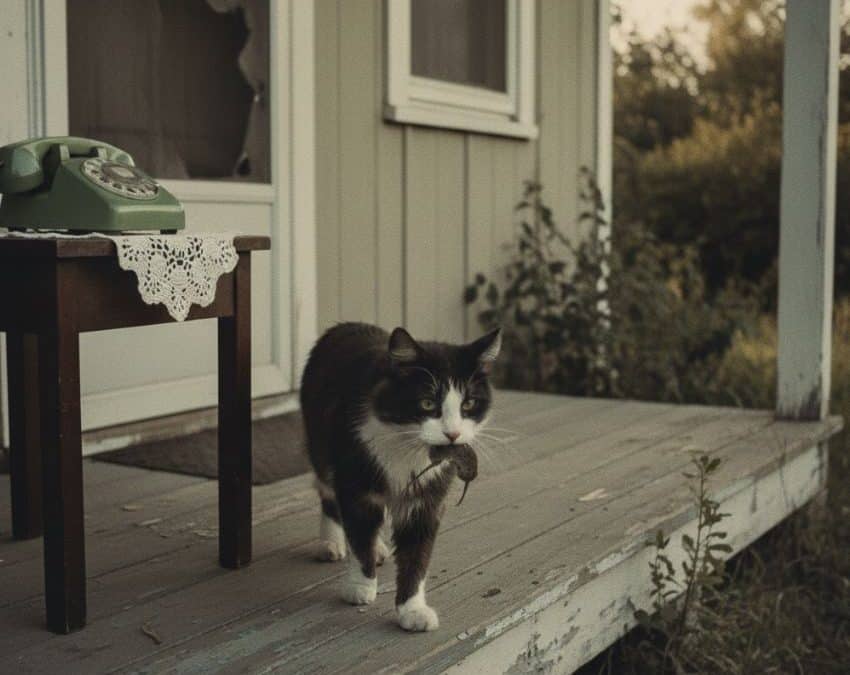
If you grew up in the 1970s or 80s, your memory of the “family cat” is likely a world away from the reality of modern cat ownership. Fifty years ago, cats were often viewed as low-maintenance accessories—useful mousers that lived largely outdoors, slept on porches, and were rarely seen by a veterinarian unless there was a dire emergency. Growing up, many of us remember cats that were “found” by grandparents, lived exclusively outside, and treated the entire world as their litter box. They were simple creatures for a simpler time.
But the world has changed, and so have our cats. In the span of just a few decades, cats have undergone a massive evolutionary shift in our homes. They have moved from the barn to the bedroom, evolving from semi-wild predators to complex, sentient “indoor individuals” with intricate emotional, social, and medical needs.
When I meet with pet parents today, they often agree: the cats of our childhood were different. Today’s cat is a member of the family, a “fur-baby,” and a long-term roommate. This evolution means that the decision to bring a new cat into your home requires a new level of personal accountability and a total shift in mindset. Oh how my grandparents would have a fit seeing how my feline warlords rule my home!!
The Myth of the “Easy” Pet
I frequently hear new adopters say, “I’ve owned cats my entire life; I know exactly what to do.” While that experience is valuable, it isn’t always enough for the modern feline. Using the “old way” of thinking to raise a “modern” cat is often where the relationship begins to fray. It is a lot like assuming that because you grew up using a rotary landline, you automatically know how to navigate a modern smartphone. They both serve the same basic purpose, but the way we interact with them—and what they require from us—has changed completely.
Think of it this way: would you invite a human to move into your spare bedroom for the next 15 years without knowing their background, their temperament, or their health history? Of course not. Yet, for years, people chose cats based almost entirely on material reasons: the color of their fur, the length of their hair, or whether they were a boy or a girl.
Today, we know that social compatibility is just as important as material preference. Every living being has a unique “purrsonality.” Just because you have had friends in the past doesn’t mean your future friends will be exactly like them and sometimes you don’t want them to! Cats are no different. Each one comes with a distinct set of boundaries, likes, and fears. Life would be quite boring if they were all alike, but that uniqueness means you have to be prepared for the specific individual you are bringing home, not the memory of a cat you had thirty years ago.
Vetting Your Source: Finding the Right Matchmaker
Because cats are more complex than we once thought, the “source” of your cat is your first major decision. The size of the rescue or shelter doesn’t matter; it is what is on the inside that counts.
Some organizations act as “clearinghouses,” focusing on high-volume adoptions to move as many animals as possible. While their goal is to save lives, they may not be able to tell you much about the cat’s specific behavior. Conversely, foster-based rescues often have volunteers who have lived with the cat for weeks or months. Read more about Meowy Matchmakers Cat Rescue
These fosters are your best resource for a successful “roommate match.” They can tell you the things a cage cannot:
- The “Secret” History: What was their life like before the rescue? Was there a medical history or a past injury you need to be accountable for?
- Social Nuances: Are they truly good with other animals, children, men, or women?
- Special Needs: Are you prepared for a cat that requires a specialized diet or ongoing medical care?
Even if you adopt littermates, don’t expect them to be identical. A mother cat (a queen) can actually mate with up to three different father cats (toms) for a single litter. This means your “matching” kittens might have entirely different genetic temperaments and social needs.
The “Roommate” Philosophy: Do You Really Know Them?
I often ask potential adopters: Are you going to have someone move into your home for a 10+ year relationship and not know anything about them?
Beyond the surface-level traits, a modern cat parent prioritizes what I call “soul-level compatibility.” It is about looking past the exterior to see if a cat’s daily rhythm matches your own. For instance, you need to know if your new roommate is independent but social, or if they are a “velcro cat” who will genuinely struggle with your 10-hour workdays. Understanding these personality layers is the difference between a house that feels harmonious and one that feels stressed.
If you aren’t willing to do the research into their background and their foster behavior, you aren’t setting them—or yourself—up for success. You wouldn’t sign a lease with a stranger without a conversation; don’t do it with a cat.

Self-Evaluation: A Reality Check for the Pet Parent
Before you head to a rescue, you must do the “inner work.” Success in 2026 starts with the human, not the cat. Ask yourself these four critical questions:
Why do I want a cat?
Is it for companionship? To “save” a life? To teach children responsibility? Be honest. If you want an ornament for your house that doesn’t require much interaction, a modern indoor cat is not the answer.
Does a cat fit my current lifestyle?
Cats are not as “independent” as the old myths suggest. They thrive on routine and social interaction. If your life is a whirlwind of travel and late nights, who will be the “anchor” for your pet?
Do I have the patience to work on “Cat Time”?
I have never had children, but I see how my siblings and I are nothing alike. Cats are the same. Do you have the patience to allow a cat to be who they are, rather than forcing them to be who you want them to be?
Do I have the resources for proper care?
The “free” cat is a relic of the past. In 2025, the average cat owner spends between $900 and $1,500 annually. This covers quality food, litter, and routine vet visits. Furthermore, pet insurance is now a vital consideration. For a healthy cat, you should budget between $25 and $50 per month for a solid policy. Without it, a single emergency or a chronic condition can be financially devastating.
Looking Forward: All Major Life Events Include Your Bestie
When you adopt a cat today, you aren’t just getting a pet for “now.” You are choosing a partner for all of life’s major events. Over the next 10 to 20 years, you may move, change jobs, or experience family shifts.
Will your “new bestie” remain a priority during life-altering shifts? We have to ask the hard questions: What happens to your cat if you become seriously ill, face a housing crisis, or even pass away? Do you have a designated emergency caretaker—someone who understands that a cat shouldn’t be left alone for 48 hours with just a “big bowl of kibble”? These are the social and material resources you must have in place before you bring a cat home. True accountability means ensuring their safety even when you aren’t the one there to provide it.
If You Are Unsure: The Power of Fostering
If these questions make you hesitate, that is a sign of a responsible pet parent! If you aren’t sure if you’re ready for the long-term accountability, try fostering or volunteering.
Fostering allows you to observe these incredible, complex creatures up close. It gives you a front-row seat to how cats have evolved and allows you to “test drive” the responsibilities of modern cat ownership without the immediate 15-year commitment. It is the ultimate way to see if your lifestyle and a cat’s needs truly align. It’s ok to “foster fail”
Summary: A Lifetime of Advocacy
Owning a cat today is a deep, rewarding, and often challenging commitment. We have moved past the days of the “outdoor mouser” and into an era where we recognize cats as the unique, complex beings they truly are.
This perspective is something I’ve carried with me since I was a little girl. I remember my mother and grandparents arguing with me, telling me that “a cat is just a cat.” They insisted that cats didn’t need to be provided for or cared for in the ways I wished—but even as a child, I knew better. I felt a unique connection to them that went well beyond a typical pet. That child is still here today, still advocating, still caring, and still loving cats the way she always wanted them to be loved.
If you are looking for a soulmate who will challenge you, entertain you, and bond with you in ways you never imagined, then you are in the right place. However, if you still view cats as low-maintenance accessories in your home, then a cat is not for you. It’s okay—times have changed. Our standards for their happiness have risen, and if we aren’t willing to meet those standards, we aren’t ready for the cat. By taking this decision seriously and evaluating your own readiness, you are already one step closer to a truly incredible bond.
Reliable Resources for Potential Cat Parents:
- American Association of Feline Practitioners (AAFP): catfriendly.com – Expert advice on the unique needs of cats.
- Fear Free Happy Homes: fearfreehappyhomes.com – Training and behavior resources to keep your future cat happy.
- NAPHIA (North American Pet Health Insurance Association): naphia.org – For understanding the financial side of pet insurance.
In our next blog: Phase Two—The Big Arrival. How to integrate your new cat into your home as a “single” pet for a smooth, fearless transition.